
Your liver is one of the hardest‑working organs in your...
Iron Deficiency Anemia: Signs of Hidden Gastrointestinal Bleeding
What Happens If Fatty Liver Is Untreated? Understanding Risks and Complications
Fatty liver disease, also known as hepatic steatosis, is...
Why Are My Liver Enzymes High But I Feel Fine?
It can be surprising — even alarming — when a routine...
Early Signs of Liver Disease in Adults: What to Watch For
The liver is a vital organ that performs numerous...
Can Fatty Liver Be Reversed Naturally? Evidence-Based Strategies for Liver Health
Fatty liver disease, particularly non-alcoholic fatty...
How Serious is Fatty Liver Disease: Severity, Consequences, and Management Strategies
Fatty liver disease (FLD) has emerged as one of the most...
Right-Side Liver Pain Under the Ribs: Causes, Symptoms, and Advanced Treatment Strategies
Discomfort or pain in the right upper quadrant of the...
Elevated Liver Enzymes: Causes and Treatment Options
Elevated liver enzymes are a frequent finding during...
Non-Alcoholic Fatty Liver Disease Treatment Near Me: Options, Care, and What to Expect
Non-alcoholic fatty liver disease (NAFLD) is a widespread...
Fatty Liver Disease Symptoms and Treatment: What You Need to Know
Fatty liver disease has become one of the most widespread...
Feeling constantly tired despite getting enough sleep? Finding yourself short of breath after climbing a single flight of stairs? Maybe you've noticed frequent headaches, dizziness, or difficulty concentrating, but you can't quite explain why. These symptoms are often blamed on stress, aging, or a busy lifestyle. However, they may actually point to iron deficiency anemia—a condition that sometimes develops because of slow, hidden bleeding somewhere in the digestive tract.
Unlike obvious bleeding from an injury, gastrointestinal (GI) bleeding can occur quietly over weeks or even months. Small amounts of blood loss may go unnoticed, yet over time they can gradually deplete your body's iron stores. For many adults, especially men and postmenopausal women, unexplained iron deficiency anemia is more than just a nutritional issue—it may be an important clue that an underlying digestive condition needs medical attention.
In this article, we'll explore how iron deficiency anemia and gastrointestinal bleeding are connected, which digestive conditions can cause chronic blood loss, what symptoms should never be ignored, and how a gastroenterologist can identify the source using advanced diagnostic testing.
Table of Contents
- What Is Iron Deficiency Anemia?
- How Can GI Bleeding Cause Iron Deficiency Anemia?
- Why Hidden Digestive Bleeding Often Goes Unnoticed
- Digestive Conditions That Can Cause Chronic Blood Loss
- Symptoms of Iron Deficiency Anemia
- When Should You Be Concerned?
- How Doctors Diagnose GI Bleeding
- Treatment Options
- Expert Gastroenterology Care in Katy, TX
- Frequently Asked Questions
Important Note
Iron deficiency anemia is often treated with iron supplements, but replacing iron alone may not solve the real problem if your body is slowly losing blood through the digestive tract. Identifying the underlying cause early can help prevent ongoing blood loss, improve your energy levels, and detect potentially serious gastrointestinal conditions before complications develop.
What Is Iron Deficiency Anemia?
Iron deficiency anemia develops when your body doesn't have enough iron to produce healthy red blood cells. Iron is an essential mineral used to make hemoglobin, the protein inside red blood cells that carries oxygen from your lungs to the rest of your body. Without enough iron, your tissues receive less oxygen, leading to fatigue and many other symptoms that can gradually interfere with everyday life.
Iron deficiency is the most common cause of anemia worldwide, but not every case happens because someone isn't eating enough iron-rich foods. In adults, particularly men and women after menopause, unexplained iron deficiency anemia often raises concern for chronic blood loss from the gastrointestinal tract.
Your body constantly recycles iron from old red blood cells. When blood is lost faster than iron can be replaced, iron stores become depleted. At first, you may not notice any symptoms. As iron levels continue to fall, your bone marrow struggles to produce healthy red blood cells, and anemia develops.
Because this process usually happens gradually, many people adapt to their symptoms without realizing anything is wrong. They may simply assume they're getting older, working too much, or not sleeping well enough.
How Can GI Bleeding Cause Iron Deficiency Anemia?
The digestive tract extends from the esophagus to the rectum. Bleeding can occur anywhere along this pathway. Sometimes the bleeding is obvious, such as bright red blood after a bowel movement. In many cases, however, the bleeding is microscopic and invisible to the naked eye.
When tiny amounts of blood are lost every day, the body also loses iron. Although the amount may seem insignificant, the cumulative effect over weeks or months can become substantial enough to produce iron deficiency anemia.
This is why gastroenterologists frequently evaluate adults with unexplained iron deficiency anemia—even if they have never noticed blood in their stool.
Some patients are surprised to learn that they have been experiencing chronic gastrointestinal bleeding without any pain or obvious digestive symptoms. Others may recall occasional dark stools, mild abdominal discomfort, or subtle changes in bowel habits that they never considered important.
Because hidden GI bleeding cannot usually be detected without medical testing, identifying the source often requires specialized evaluation.

Why Hidden Digestive Bleeding Often Goes Unnoticed
One of the most challenging aspects of gastrointestinal bleeding is that it isn't always visible. Unlike bleeding from a cut on your skin, slow internal bleeding may not change the appearance of your stool at all. In fact, many people with iron deficiency anemia are shocked when testing reveals chronic blood loss because they never noticed any obvious signs.
This type of bleeding is often called occult gastrointestinal bleeding, meaning the blood cannot be seen without specialized stool testing or other diagnostic evaluation.
Because the bleeding is gradual, the body slowly loses iron over time. Rather than causing sudden illness, symptoms tend to develop little by little. Fatigue becomes more noticeable. Exercise becomes harder. Climbing stairs feels unusually exhausting. Concentration may decline, and some people develop headaches, dizziness, or restless legs.
These symptoms are easy to attribute to everyday stress, making it even more important to investigate unexplained anemia rather than simply treating it with supplements alone.
Digestive Conditions That Can Cause Chronic Blood Loss
Many different gastrointestinal disorders can lead to slow, ongoing blood loss. Some are relatively common and easily treated, while others require more extensive evaluation and long-term management. Identifying the underlying cause is essential because treatment depends on the specific condition responsible for the bleeding.
Colon Polyps
Colon polyps are small growths that develop along the lining of the large intestine. Most polyps are not cancerous, but certain types can gradually become colorectal cancer if left untreated. Some polyps bleed intermittently, causing slow iron loss without producing obvious symptoms.
A colonoscopy allows your gastroenterologist to detect and often remove polyps during the same procedure, helping prevent future complications.
Colorectal Cancer
One reason physicians take unexplained iron deficiency anemia seriously is its possible association with colorectal cancer. Cancerous growths may bleed slowly for months before causing noticeable digestive symptoms. In some patients, anemia is actually the first sign that prompts further investigation.
Although colorectal cancer becomes more common with age, early detection through appropriate evaluation significantly improves treatment outcomes.
Stomach Ulcers
Ulcers are open sores that develop in the stomach or upper portion of the small intestine. They commonly result from Helicobacter pylori infection or prolonged use of nonsteroidal anti-inflammatory drugs (NSAIDs) such as ibuprofen or naproxen.
Some ulcers cause abdominal pain, but others bleed slowly without producing severe symptoms. Over time, chronic bleeding from an ulcer may contribute to iron deficiency anemia.
Gastritis
Inflammation of the stomach lining, known as gastritis, may also lead to chronic blood loss. Depending on the cause, patients may experience nausea, indigestion, upper abdominal discomfort, or no symptoms at all.
When upper gastrointestinal bleeding is suspected, your physician may recommend an upper endoscopy to examine the esophagus, stomach, and duodenum directly.
Inflammatory Bowel Disease
Conditions such as Crohn's disease and ulcerative colitis cause chronic inflammation of the digestive tract. Ongoing inflammation may damage the intestinal lining, leading to repeated blood loss along with diarrhea, abdominal pain, urgency, and weight loss.
In many patients, iron deficiency anemia develops because inflammation and chronic bleeding occur simultaneously.
Hemorrhoids
Although hemorrhoids usually cause bright red blood that patients can see, frequent bleeding over a long period may contribute to iron deficiency anemia in some individuals. However, physicians avoid assuming hemorrhoids are the sole cause until more serious conditions have been excluded.
Important Note
Learning that you have iron deficiency anemia can feel overwhelming, especially if your doctor recommends additional testing. Remember that many causes of gastrointestinal bleeding are treatable, and not every abnormal test result means cancer. The purpose of further evaluation is to identify the source of blood loss as early as possible so you can receive the most appropriate treatment and avoid ongoing complications.
Symptoms of Iron Deficiency Anemia
Iron deficiency anemia affects far more than your energy level. Because oxygen is delivered to every organ and tissue through your red blood cells, low hemoglobin levels can impact nearly every part of the body. The symptoms often appear gradually, making them easy to overlook until they begin interfering with daily life.
Many patients describe feeling tired even after a full night's sleep. Tasks that once felt routine—walking long distances, climbing stairs, exercising, or even concentrating at work—may suddenly become more difficult. Since these symptoms develop slowly, people often assume they're simply getting older or dealing with stress.
Common symptoms include:
- Persistent fatigue or weakness
- Shortness of breath during normal activities
- Dizziness or feeling lightheaded
- Frequent headaches
- Pale skin
- Cold hands and feet
- Rapid heartbeat or heart palpitations
- Difficulty concentrating
- Reduced exercise tolerance
- Restless legs, especially at night
Some people also develop unusual cravings for non-food items such as ice, clay, or starch, a condition known as pica. While not everyone experiences this symptom, it can be a clue that iron stores have become severely depleted.
If anemia is caused by gastrointestinal bleeding, digestive symptoms may also be present. Some individuals notice abdominal discomfort, heartburn, constipation, diarrhea, or occasional blood in the stool. Others have no digestive symptoms whatsoever, which is why laboratory testing often plays such an important role in diagnosis.
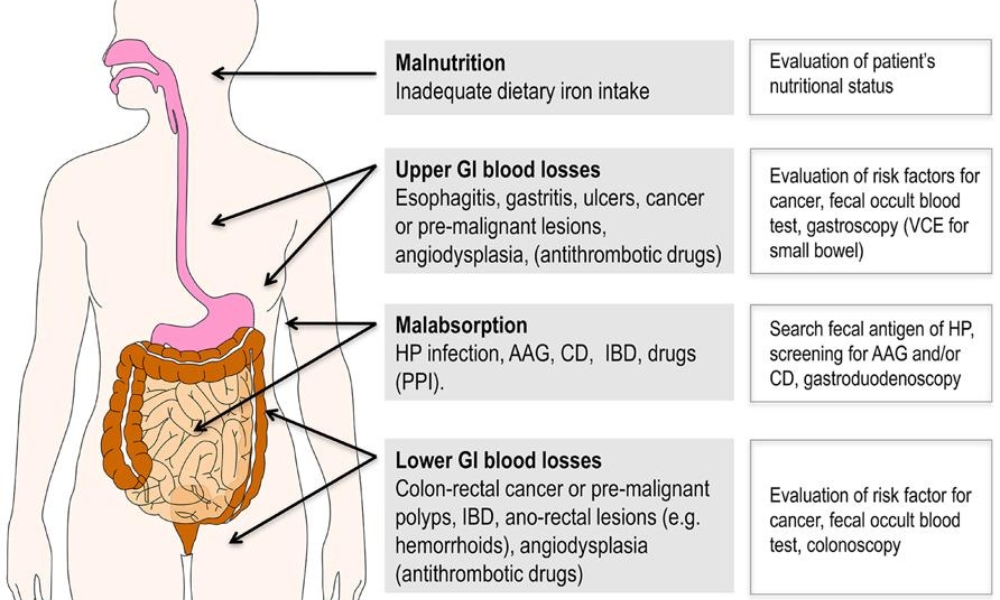
When Should You Be Concerned About Iron Deficiency Anemia?
Not every case of iron deficiency anemia is caused by gastrointestinal bleeding, but certain situations deserve prompt evaluation. In adult men and postmenopausal women, unexplained iron deficiency anemia is considered especially important because dietary deficiency alone is less common.
You should speak with a healthcare provider if:
- Your blood tests show iron deficiency anemia without an obvious explanation.
- You continue feeling fatigued despite taking iron supplements.
- You have a family history of colorectal cancer or colon polyps.
- You notice changes in your bowel habits.
- You develop unexplained weight loss.
- You experience recurring abdominal pain.
- You have black, tarry stools or visible rectal bleeding.
- Your anemia continues to worsen despite treatment.
While these symptoms do not automatically indicate a serious condition, they increase the importance of identifying the underlying cause rather than simply replacing lost iron.
When Is It an Emergency?
Seek immediate medical attention if you experience:
- Large amounts of rectal bleeding
- Vomiting blood or material that resembles coffee grounds
- Black, tarry stools accompanied by weakness or dizziness
- Chest pain or severe shortness of breath
- Fainting or near-fainting episodes
- Rapid heartbeat with signs of significant blood loss
These symptoms may indicate active gastrointestinal bleeding that requires urgent evaluation and treatment.
How Do Gastroenterologists Find the Source of GI Bleeding?
Finding the source of chronic blood loss requires more than confirming that anemia is present. Your gastroenterologist will begin by reviewing your medical history, symptoms, medications, dietary habits, and family history of digestive diseases.
Blood tests help determine whether iron deficiency is present and measure how severely your body's iron stores have been depleted. Additional laboratory studies may evaluate ferritin levels, iron saturation, vitamin deficiencies, and other potential causes of anemia.
Because hidden bleeding often occurs inside the digestive tract, imaging and endoscopic procedures are frequently recommended.
Colonoscopy
A colonoscopy in Katy, TX allows your physician to examine the entire colon using a flexible camera. During the procedure, polyps can often be removed immediately, tissue samples can be collected if necessary, and bleeding sources can frequently be identified.
If this is your first colonoscopy, reviewing these preparation instructions beforehand can help ensure the examination is as accurate as possible.
Upper Endoscopy
An upper endoscopy examines the esophagus, stomach, and upper small intestine. It is especially useful when stomach ulcers, gastritis, or upper gastrointestinal bleeding are suspected.
Stool Testing
Even when blood cannot be seen, specialized stool tests may detect microscopic bleeding. These tests often provide valuable clues that further evaluation is needed.
Additional Testing
Depending on your individual situation, your physician may recommend additional imaging studies, capsule endoscopy, or specialized testing if the source of bleeding remains unclear after initial evaluation.
Every diagnostic plan is personalized. Some patients require only one procedure, while others benefit from a more comprehensive assessment to identify the exact cause of blood loss.
Treatment Focuses on More Than Replacing Iron
Iron supplements play an important role in restoring healthy iron levels, but successful treatment depends on correcting the underlying cause of blood loss whenever possible. Otherwise, anemia may continue to return despite repeated iron replacement.
Treatment varies according to the diagnosis:
- Colon polyps are often removed during colonoscopy.
- Bleeding stomach ulcers may be treated with medications and, when appropriate, therapy for H. pylori infection.
- Inflammatory bowel disease is managed with medications that reduce intestinal inflammation.
- Hemorrhoids may improve with dietary changes, increased fiber intake, hydration, and specialized treatments when necessary.
- Gastritis is treated based on its underlying cause, which may include acid suppression therapy or medication adjustments.
Most patients also receive recommendations for iron replacement through oral supplements or intravenous iron when clinically appropriate. Your physician will monitor blood counts over time to ensure treatment is working and that iron stores continue to recover.
Can Iron Deficiency Anemia Be Prevented?
Not every case of iron deficiency anemia can be prevented, especially when it results from an underlying gastrointestinal condition. However, maintaining good digestive health and addressing symptoms early can reduce the risk of prolonged blood loss and its complications.
Eating a balanced diet that includes iron-rich foods such as lean meats, seafood, beans, lentils, spinach, and fortified cereals helps support healthy red blood cell production. Pairing these foods with vitamin C-rich fruits and vegetables can improve iron absorption.
It's also important to avoid taking iron supplements unless recommended by your healthcare provider. While supplements can correct iron deficiency, they do not address the reason iron levels became low in the first place. Delaying evaluation by relying solely on supplements may allow an underlying gastrointestinal condition to progress unnoticed.
Routine preventive care is equally important. Adults who are eligible for colorectal cancer screening should stay up to date with recommended preventive digestive health screenings. Detecting colon polyps before they become cancerous can prevent future bleeding and reduce the risk of colorectal cancer.
If you develop ongoing digestive symptoms such as abdominal pain, acid reflux, constipation, unexplained weight loss, or changes in bowel habits, don't ignore them. Early evaluation often leads to simpler treatment and better long-term outcomes.
Living With Iron Deficiency Anemia
Recovering from iron deficiency anemia takes time. Even after treatment begins, your body needs several weeks to produce healthy red blood cells and replenish its iron stores. Many patients notice gradual improvements in energy, concentration, and exercise tolerance rather than an overnight recovery.
Following your treatment plan is essential. This may include taking iron supplements exactly as prescribed, attending follow-up appointments, and completing recommended procedures if the source of bleeding has not yet been identified.
Your healthcare provider may repeat blood tests periodically to monitor your hemoglobin and iron levels. If these values fail to improve as expected, additional evaluation may be necessary to determine whether bleeding is continuing or another condition is contributing to the anemia.
Patients should also report any new symptoms, including visible blood in the stool, worsening fatigue, abdominal pain, black stools, or unexplained weight loss. These changes can provide important information about your digestive health and may require further investigation.
Expert Evaluation for Iron Deficiency Anemia in Katy, TX
When iron deficiency anemia has no clear explanation, identifying the underlying cause becomes just as important as correcting the anemia itself. At Imperial Digestive Health Specialists PLLC, Dr. Oforbuike Ewelukwa provides comprehensive evaluations for patients with unexplained anemia, chronic gastrointestinal symptoms, and suspected digestive tract bleeding.
Using advanced diagnostic procedures—including upper endoscopy and colonoscopy—our goal is to determine whether hidden gastrointestinal bleeding is contributing to your condition and to develop a personalized treatment plan based on your individual needs.
Whether your anemia is related to colon polyps, ulcers, inflammatory bowel disease, gastritis, hemorrhoids, or another digestive disorder, timely evaluation can help prevent continued blood loss and improve your long-term health.
If you're looking for an experienced GI doctor near you in Katy, our team is committed to delivering compassionate, evidence-based care focused on accurate diagnosis and lasting digestive wellness.
Frequently Asked Questions
Can gastrointestinal bleeding cause iron deficiency anemia?
Yes. Slow, chronic bleeding anywhere in the digestive tract can gradually reduce your body's iron stores, eventually leading to iron deficiency anemia. In many cases, the bleeding is microscopic and not visible without testing.
Can you have GI bleeding without seeing blood in your stool?
Absolutely. Many people with occult gastrointestinal bleeding never notice visible blood. Instead, they develop symptoms related to iron deficiency anemia, such as fatigue, weakness, dizziness, or shortness of breath.
Does iron deficiency anemia always mean cancer?
No. Many conditions—including stomach ulcers, gastritis, hemorrhoids, colon polyps, inflammatory bowel disease, and certain medications—can contribute to chronic blood loss. However, unexplained iron deficiency anemia should always be evaluated to rule out serious gastrointestinal disease, including colorectal cancer.
Will taking iron supplements fix the problem?
Iron supplements help replace lost iron, but they do not treat the underlying cause of chronic bleeding. If blood loss continues, iron deficiency anemia may return after treatment ends.
Do I need both an endoscopy and a colonoscopy?
Some patients benefit from one procedure, while others may require both depending on their age, symptoms, laboratory findings, and overall risk factors. Your gastroenterologist will recommend the most appropriate evaluation for your situation.
When should I see a gastroenterologist for iron deficiency anemia?
You should consider seeing a gastroenterologist if you have unexplained iron deficiency anemia, persistent fatigue despite iron therapy, visible blood in the stool, black stools, chronic abdominal symptoms, or other signs that suggest gastrointestinal bleeding.
Final Thoughts
Iron deficiency anemia is more than simply having low iron—it can be your body's way of signaling that something deeper is happening within the digestive tract. While dietary deficiencies are certainly possible, especially in younger individuals, unexplained iron deficiency anemia in adults deserves careful evaluation for hidden gastrointestinal bleeding.
Fortunately, modern diagnostic tools allow gastroenterologists to identify many sources of chronic blood loss before they lead to more serious complications. Whether the cause is a stomach ulcer, colon polyp, inflammatory bowel disease, hemorrhoids, or another digestive condition, early diagnosis gives you the best opportunity for effective treatment and improved quality of life.
If you've been diagnosed with iron deficiency anemia without a clear explanation, don't settle for simply replacing the iron. Understanding why your iron levels are low is an essential step toward protecting your digestive health and your overall well-being.
Medical Disclaimer
This article is intended for educational purposes only and should not be used as a substitute for professional medical advice, diagnosis, or treatment. If you have symptoms of iron deficiency anemia, unexplained fatigue, blood in your stool, black stools, or signs of gastrointestinal bleeding, consult a qualified healthcare provider promptly. If you experience heavy bleeding, severe dizziness, fainting, or chest pain, seek emergency medical care immediately.